How to Avoid These 5 Common Warehouse Safety Issues
OSHA increased the price of safety violations by almost 2%. Learn how to take action and reduce any of these common warehouse safety issues.
5 Common Warehouse Safety Issues that Shouldn't be Overlooked.
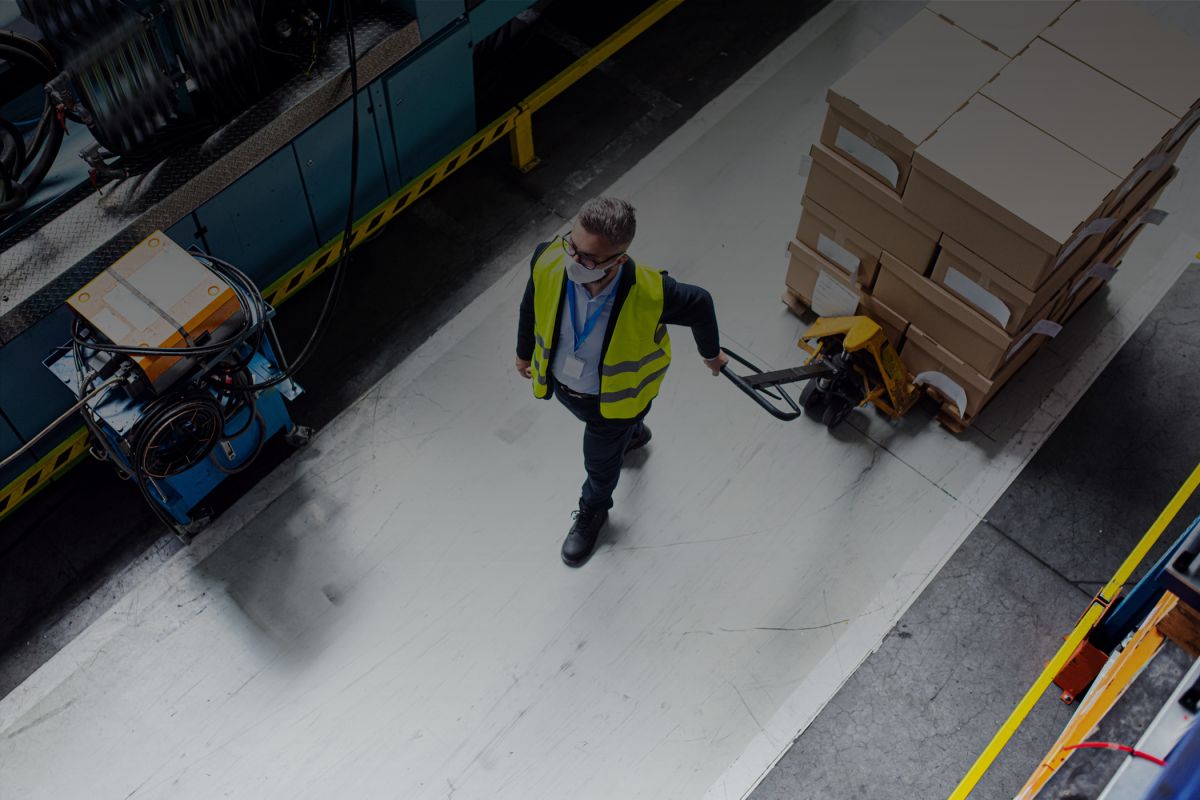
According to OSHA, the fatality rate in the warehouse industry is higher than that of the national average across all industries. When it comes to the most pressing safety issues, almost all can be prevented with safety training and warehouse signage that reinforces safety messages where they are most important.
Keep your employees safe and your warehouse accident-free by taking action to prevent these common warehouse safety issues.
1. Forklift accidents
Every year, forklift accidents are among the most commonly violated OSHA standards. Nearly 100 employees are killed and 95,000 are injured due to forklift accidents each year, and forklift turnovers are a significant percentage of these fatalities. To prevent such accidents, injuries, and fatalities, make sure all forklift operators are certified and trained on forklift safety protocols. Give your operators an inspection checklist to use before operating forklifts and encourage daily inspections with safety signage. Posters should also promote common-sense safety including paying attention to where you are driving or walking and not driving distracted.
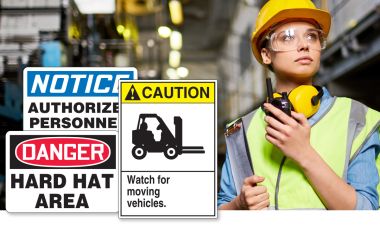
Clear, standardized signage can reinforce forklift traffic rules and hazard zones throughout the warehouse. With Custom OSHA/ANSI Safety Signs and Custom No Header Signs, facilities can tailor messages to address forklift routes, pedestrian crossings, and equipment limitations while maintaining recognized safety formats.
In addition to forklift traffic signage, consider buying heavy-duty floor marking strips to mark forklift and pedestrian traffic. And because forklift turnovers are so common, make sure you have signage that addresses overloading the equipment.
2. Slips, trips, and falls
Slips, trips, and falls from heights are the second most common type of warehouse accidents. To minimize them, keep aisles free of cords, wires, debris, and boxes. If liquid spills on the warehouse floor, be sure to clean it up immediately and post appropriate “wet floor” temporary signage. Make sure all floor markings are made with non-slip materials like Slip-Gard™ and encourage employees to check the bottoms of their shoes for grease when climbing ladders or in and out of forklifts. If ladders are frequently used in your warehouse, encourage ladder safety with ladders last and ladder safety signage.
Consistent hazard communication is critical in high-traffic areas. Custom OSHA/ANSI Safety Signs and Header Safety Signs allow you to display clear warnings and instructions in areas prone to slips, trips, and falls while keeping layouts compliant and easy to read.
3. Failure to wear PPE
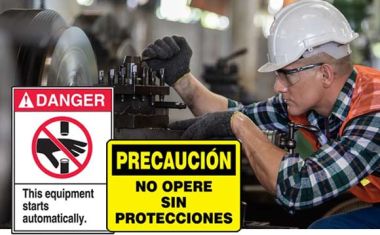
PPE protects your employees when accidents occur and can even prevent accidents from happening in the first place. Each warehouse has unique safety issues that warrant different types of PPE, but most should require hardhats and high-visibility vests to be worn at all times. Safety goggles and earplugs may also be required. When lifting heavy loads manually, workers should wear gloves, forearm protection, and weight belts if needed. In areas where PPE is required, be sure to post safety signage that encourages the use of PPE and even states which types of PPE are required.
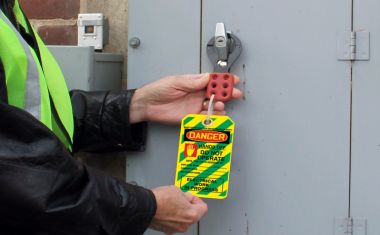
Using Custom OSHA/ANSI Signs and Custom Header Safety Tags, warehouses can clearly identify PPE requirements for specific zones or tasks. Customized messaging helps reinforce compliance and ensure workers understand exactly what protection is required.
4. Unsafe stacking of materials
Though PPE will protect workers if debris falls from a warehouse shelf, it will do little to prevent injury if an inventory box falls, which is why warehouses must follow OSHA rules around height limitations for stacking and storing materials. When pallets are stacked too high, they lose stability and are more likely to fall. Make sure you’re familiar with safe stacking methods and OSHA guidelines for materials handling and storage.
Hazard identification signs and equipment labeling play an important role in preventing stacking-related incidents. Custom OSHA/ANSI Safety Signs and Custom OSHA/ANSI Tags by the Roll can be used to label load limits, stacking restrictions, and storage procedures throughout the warehouse.
5. Poor manual lifting form
When employees are lifting and moving inventory manually, they become more susceptible to injury, especially if they are engaged in repetitive movements. In fact, back disorders affect more than 600,000 employees each year and cost roughly $50 billion annually according to NIOSH. Your safety officer should provide ergonomic training for employees, share OSHA’s heavy lifting techniques, and post signage about heavy lifting throughout the warehouse to encourage proper technique.
Clear lifting guidelines and ergonomic reminders can be reinforced with Custom OSHA/ANSI Safety Signs and Custom OSHA/ANSI Tags placed in loading zones and inventory areas. Tailored messaging helps ensure employees follow proper technique and reduce strain-related injuries.
Avoiding common warehouse safety hazards requires more than training alone. Explore Accuform’s full range of custom safety sign builders to create OSHA and ANSI signs, safety tags, placards, and identification tools tailored to your warehouse layout and operational needs.