How Does the Updated OSHA Signage Standard (1910.145) Affect You?
Using ANSI Signs in your Facility? OSHA Documents that it’s OK.
This brief Q&A can be used to answer the most common questions related to the updated 1910.145 signage standard.
When did OSHA update the 1940.145 signage standard?
In September of 2013, the Occupational Safety and Health Administration (OSHA) updated its workplace safety sign and tag regulations by adding to the longstanding 29 CFR 1910.145 specifications for accident prevention signs with specific portions of American National Standards Institute (ANSI) Z535 standard.
So what does the updated OSHA signage standard mean?
As complicated as that may sound, it’s very straightforward. This update means that it’s officially ok for you to use “ANSI-style” signs in your facility – without being documented for a “de minimis” condition (as explained in why is OSHA Documentation so important).
The OSHA ruling ultimately gives you additional options to comply with OSHA’s existing signage standards without increasing the cost of compliance. Per OSHA, in addition to standard OSHA signs, you can use ANSIZ53.1-1967, Z35.1-1968, and Z35.2-1968 to comply with the updated or earlier standards.
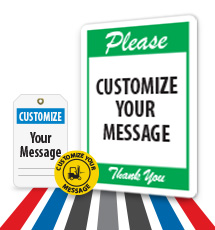
To apply these updated standards in your facility, you may need signage that reflects ANSI Z535 formatting while addressing specific hazards and operational requirements. Accuform’s Design ID Pro custom sign builders allow you to create Custom OSHA/ANSI Safety Signs, Custom OSHA/ANSI Safety Tags, and Custom OSHA/ANSI Tags by the Roll that align with recognized OSHA and ANSI formats while incorporating your own messaging.
OSHA specifications for safety signs are spelled out in 29 Code of Federal Regulation (CFR) 1910.145. These provisions cover all safety signs except those designed for streets, highways, railroads, plant bulletin boards, or safety posters.
Why is OSHA Documentation so Important?
Previously, OSHA allowed the use of the ANSI Z535-style signs without a fine or violation, but OSHA inspectors would/could document their use as a de minimis condition during an inspection - de minimis being different than the standard, but with no direct or immediate relationship to safety or health. With its inclusion into the OSHA standard, a de minimis condition no longer exists when you use ANSI-style sign.
What's the difference between OSHA style and the ANSI style signs?
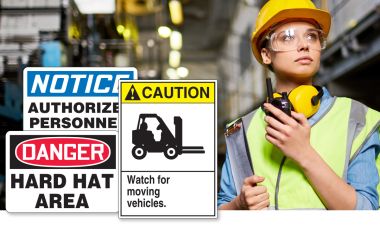
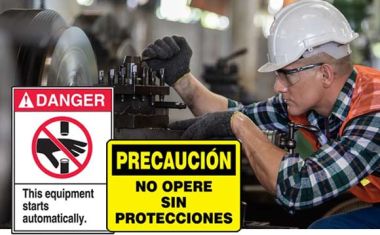
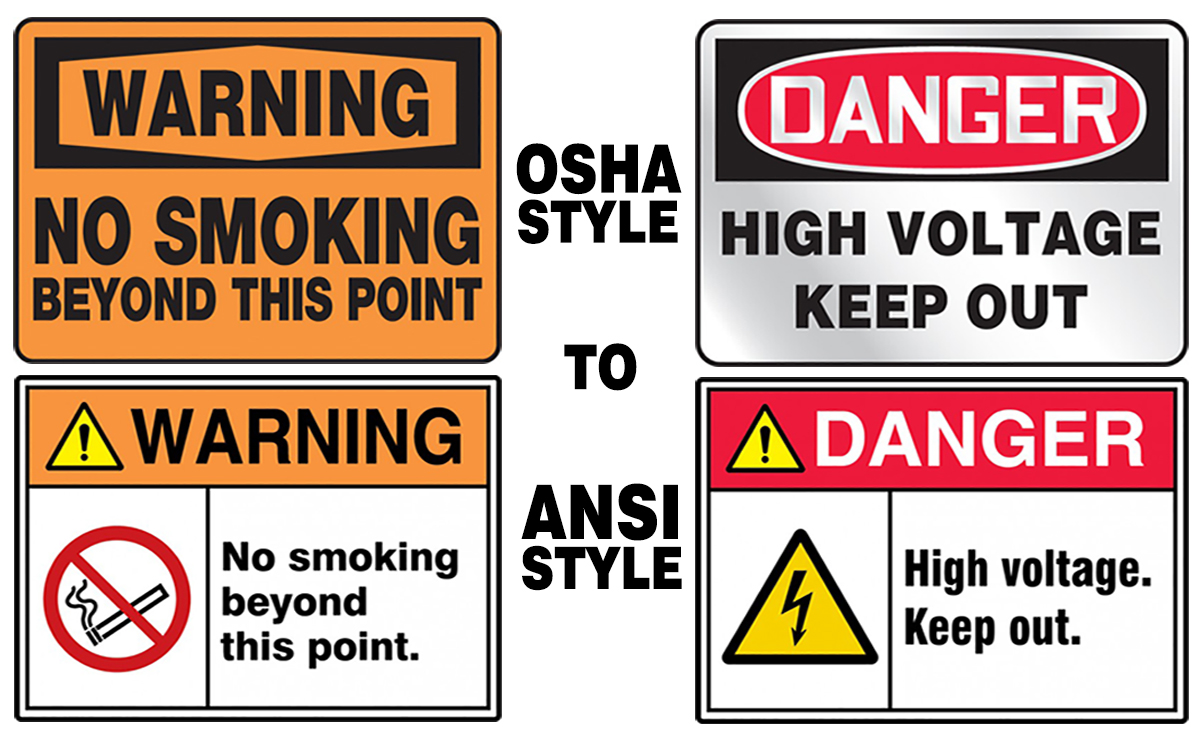
The traditional OSHA-style signs and labels use upper case lettering, and the message is generally centered underneath the header. The ANSI style signs and labels often include a visual alert symbol (triangle with an exclamation point!), a large symbol, and left-justified upper and lower case message lettering.
Where can I find the ANSI-style Signs?
AccuformNMC calls these “ANSI-ISO Signs” because they incorporate a refreshed ANSI header, with internationally recognized International Organization for Standardization (ISO) symbols.
In addition to stock options, Design ID Pro provides tools to create custom ANSI signs and custom ANSI safety tags tailored to your facility. Customization helps ensure signage matches your layout and hazard profile while maintaining ANSI and OSHA compliance standards.
International Organization for Standardization (ISO) signs and labels are distinguished by shapes and colors, making them easily understood across virtually all language barriers.
This refreshed look is available on tags and labels – stock and custom, too!
Workplace safety programs often require more than stock signage alone. Accuform’s Design ID Pro custom builder tools allow you to create OSHA and ANSI compliant signs, tags, and placards tailored to specific hazards, workflows, and facility layouts. Explore the full collection of custom safety sign builders to support consistent, site-specific safety communication.